Suppose you have a large magic recipe book in your house. Each night, as you cook, this book learns what your family enjoys to eat, what you have in your fridge, and even some of your favorite family recipes.
Suppose you were informed by a large international restaurant chain: “Give us your magic recipe book! We will store it in a warehouse three states away (or across the ocean), add it to millions of other people's recipes, and send you back a dish when you call.”
Would you share your family's special recipes? Probably not. You'd be thinking of who else might catch a peek at them, if the warehouse gets broken into, or if the chef hundreds of miles away even knows how your family prefers their soup salted.
Sovereign AI, in the business world, is like the secret sauce or the formula, the kernel of an enterprise's own business logic, customer insights, and data kept safe in their very own kitchen.
What is Sovereign AI?
Tech chiefs and policymakers have been discussing AI governance in tech news across the country. But what does sovereign AI mean without all the jargon?
Sovereign AI is the capability of an organization or country to design, develop, train, and manage AI, rather than solely relying on the technology of foreign or third-party major companies.
- Traditional Shared Cloud AI Models: Based on centralized off-site data.
- Sovereign AI: Generates localized, policy-compliant intelligence within managed perimeters.
To grasp why this is so important today, it is necessary to examine the three pillars of sovereignty in tech:
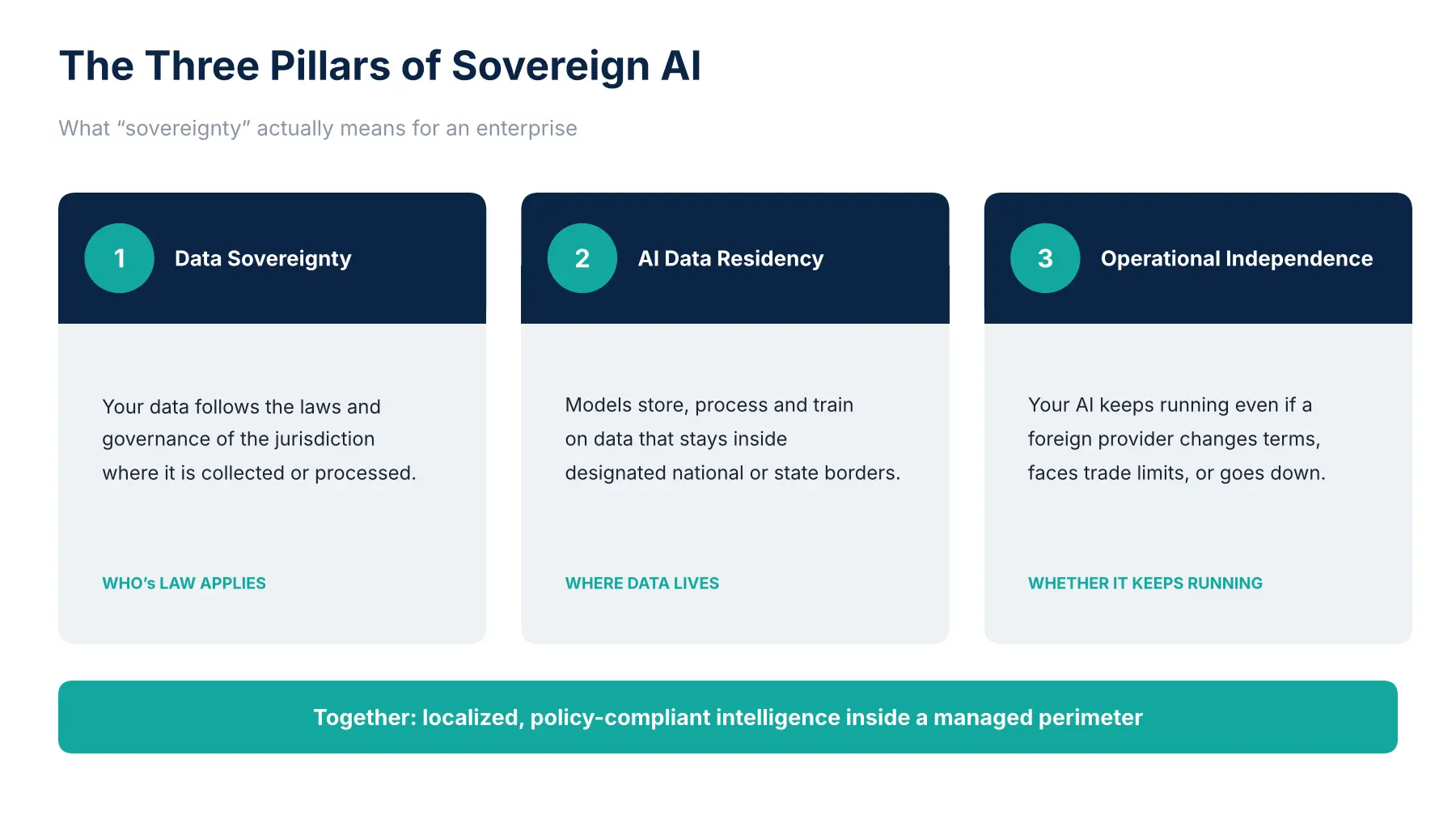
- Data Sovereignty AI: Your data is subject to the laws and governance of the geographic jurisdiction in which it's collected or processed.
- AI Data Residency: The physical location where AI models store, process, and train on data remains within designated national or state borders.
- Operational Independence: You can continue using your AI even if a foreign cloud provider changes its service terms, faces trade or geopolitical limitations, or suffers a global outage.
The Global ‘One-Size-Fits-All’ AI Model: What’s Going Wrong?
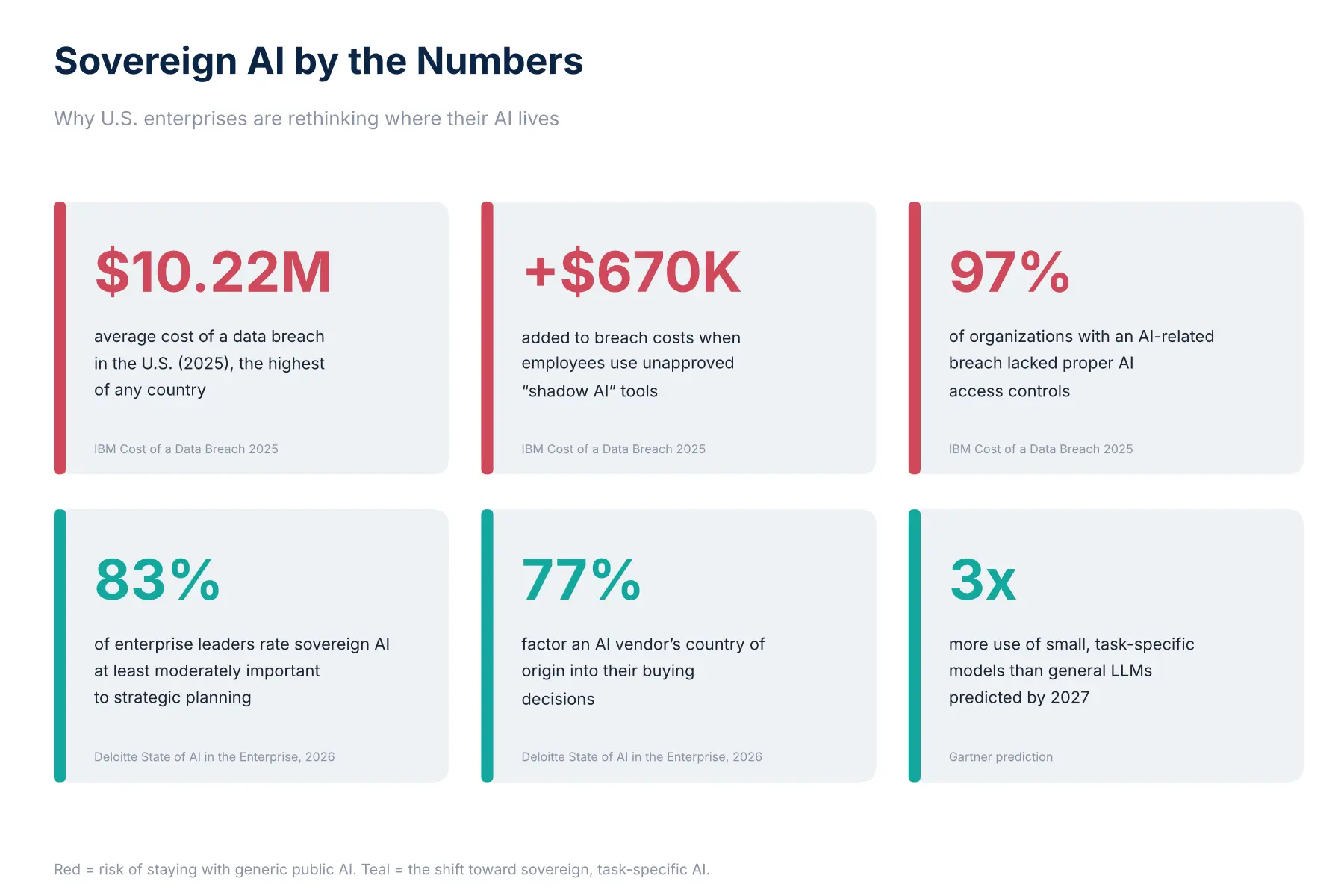
Over the last several years, US businesses have been scrambling to implement large foundation models (LLMs). While these public AI platforms are strong and increasingly integrated into Fortune 500 and mid-market operations, significant pain points have surfaced.
1. The Regulatory Maze (SEC, HIPAA, CCPA, and Beyond)
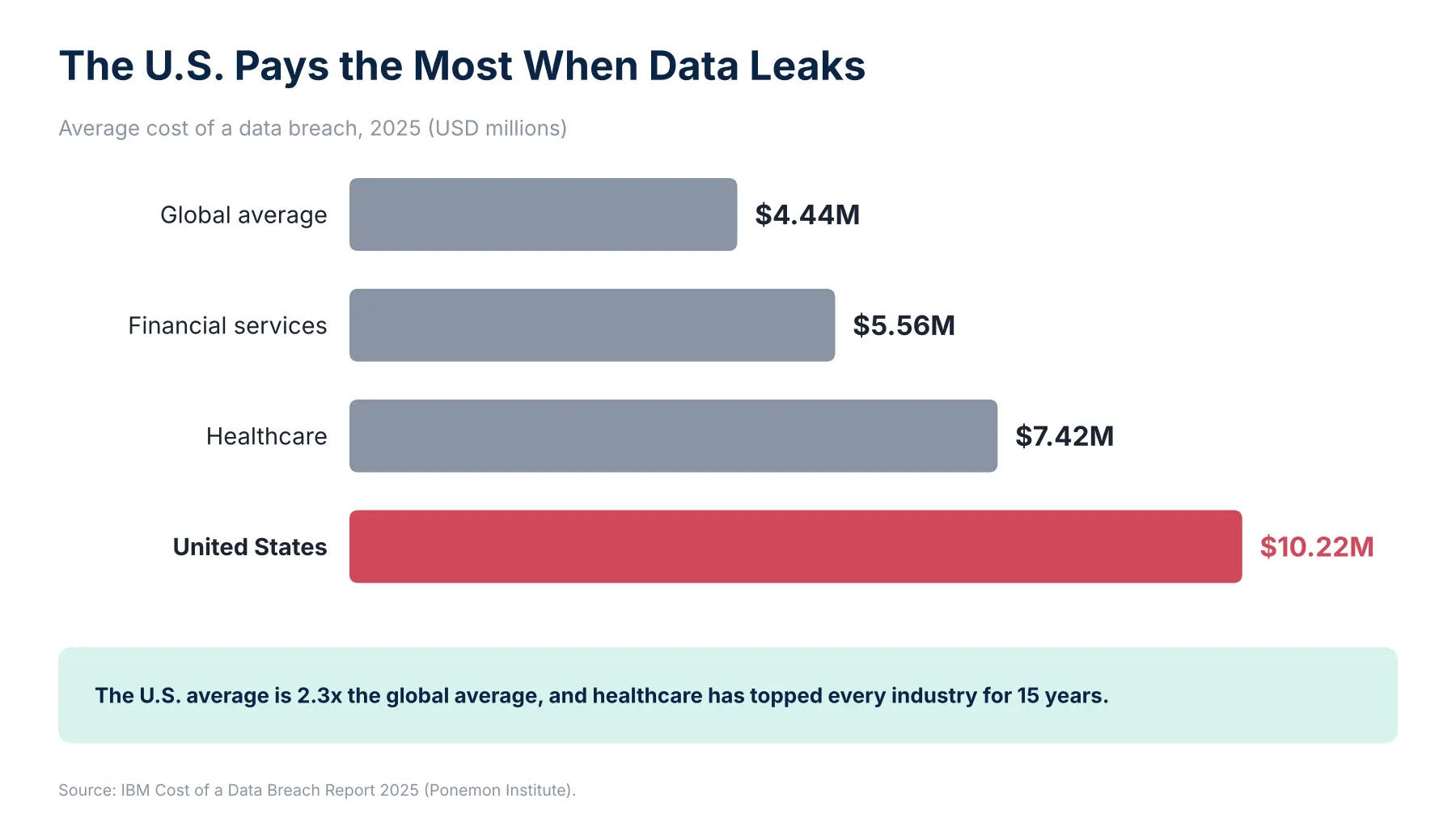
Compliance is a non-negotiable responsibility in the U.S. and comes at a huge cost. For regulated industries, agencies like the SEC, FINRA, HIPAA, and CCPA impose strict guidelines. Sending sensitive records into public models without sufficient security controls creates massive legal liabilities, risk of data breaches, heavy fines, and reputational harm.
2. Cultural & Linguistic Nuance
A universal model trained on broad web data fails to capture local context. A tool developed for a hospital network in Texas must understand local billing codes, regional patient demographics, and specific U.S. medical acronyms, not a global average of web text.
3. Intellectual Property (IP) Protection
Publishing proprietary code, drug designs, or strategic financial models into a public commercial LLM is a risky slope. Sovereign AI ensures custom-built intelligence remains strictly within your enterprise perimeter.
Enterprise Decision Matrix: Public AI vs. Sovereign AI
| Key Evaluation Factor | Traditional Public LLMs | Region-Specific Sovereign AI |
|---|---|---|
| Data Location | Centralized global data centers (often unknown locations) | Strict AI data residency within specified region/on-prem |
| Regulatory Compliance | Generic compliance; high risk for strict industries | Built specifically for HIPAA, SEC, GDPR, and CCPA adherence |
| Model Control | Vendor controls updates, changes, and model deprecation | Enterprise owns or strictly controls model weights & logic |
| Data Sovereignty | Low; data may train future public foundation models | Absolute; zero data leakage to external third parties |
| Customization Depth | Limited to prompt engineering and light API tuning | Deep domain customization on proprietary datasets |
| Operational Resilience | Vulnerable to vendor outages or foreign policy shifts | Highly resilient; self-hosted or localized private cloud |
The Rationale for U.S. Enterprises to Adopt Region-Specific AI
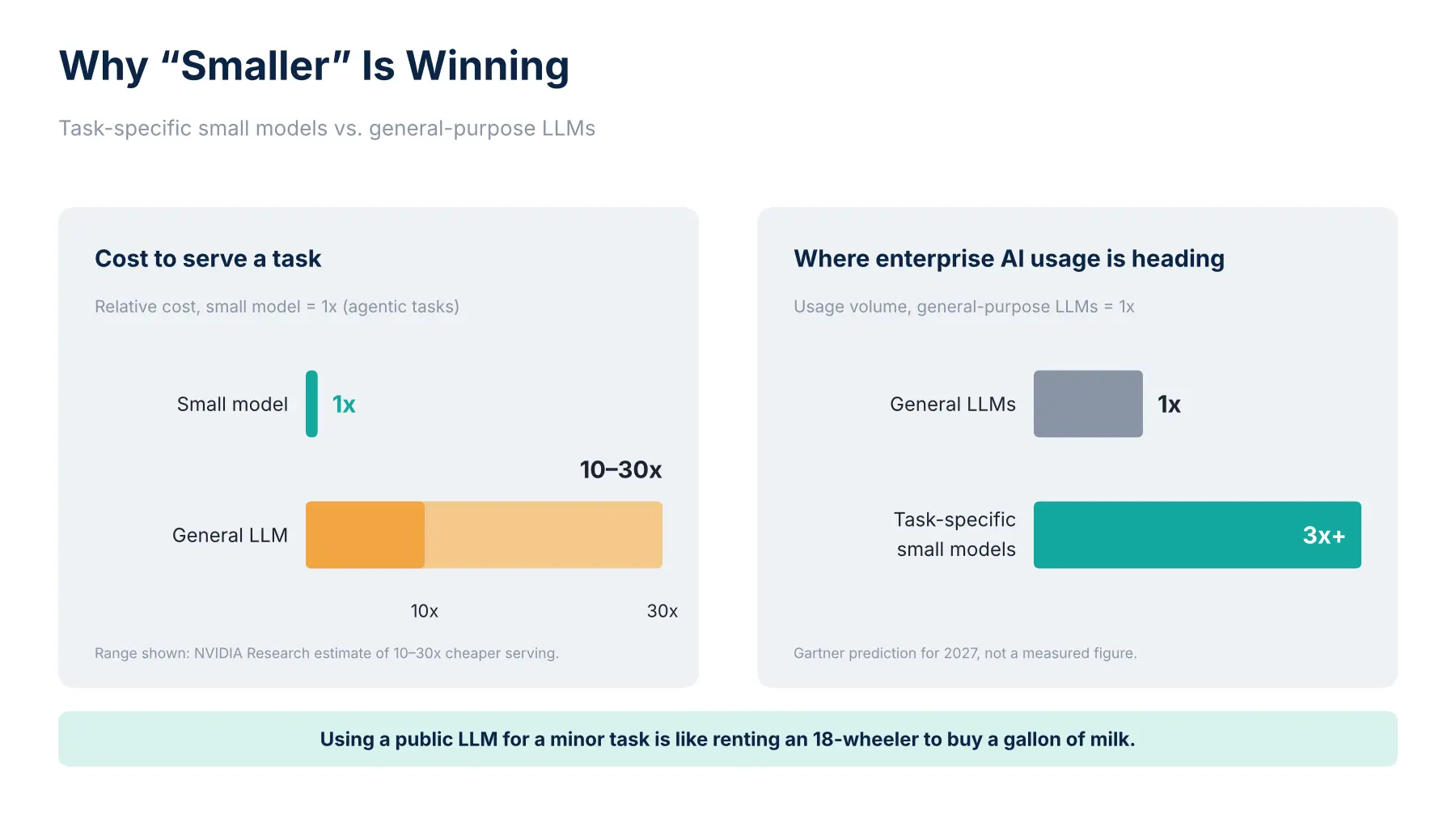
Across every sector of the American economy, from healthcare and banking to manufacturing and public service, leadership teams are discovering that bigger is not always better.
Localized enterprise architecture models are fast emerging as the gold standard.
Core Pillars Driving Enterprise Investment:
- Eliminating Compliance Friction: Developing models aligned with local data residency laws eliminates audit anxiety. Compliance teams can pinpoint exact physical server and perimeter locations housing operational intelligence.
- Reducing Latency and Compute Costs: Using public LLMs for minor tasks is like renting an eighteen-wheeler truck to buy a single gallon of milk. Smaller Sovereign Language Models (SLMs) trained on focused corporate datasets require significantly less compute, respond faster, and lower cloud hosting costs.
- Defending Critical Infrastructure & Supply Chains: National security and critical infrastructure—such as energy grids in the Midwest or defense systems in Virginia, require always-on availability that cannot be disrupted by overseas vendor disputes or international policy shifts.
Building Your Sovereign AI Strategy: A Step-by-Step Roadmap
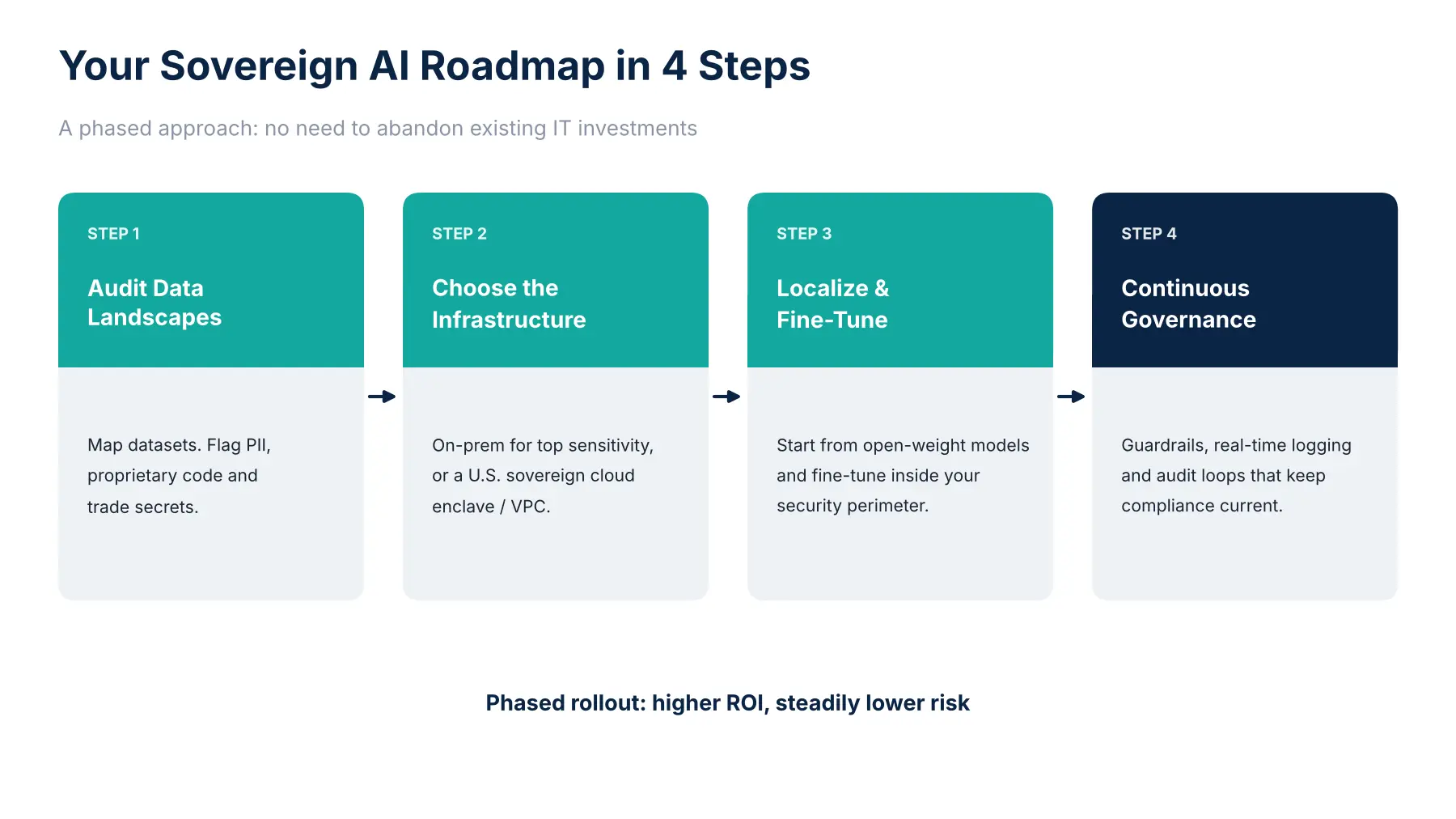
Transitioning to a sovereign AI architecture does not require abandoning current IT investments. A phased, strategic implementation yields high ROI while systematically decreasing risk.
Step 1: Audit Data Landscapes
Map all enterprise datasets. Identify sources containing Personally Identifiable Information (PII), proprietary code, or trade secrets governed by data sovereignty regulations.
Step 2: Choose the Appropriate Infrastructure
Select the deployment target based on sensitivity requirements:
- Private On-Premise Servers: For top-tier sensitivity (Defense, Healthcare R&D, Core Banking).
- VPC / Sovereign Cloud Enclaves: Utilizing dedicated U.S. sovereign cloud instances (e.g., AWS GovCloud, Azure Government) ensuring data remains domestic and accessible only by authorized personnel.
Step 3: Localize and Fine-Tune Models
Rather than training multi-billion dollar foundation models from scratch, leverage high-performing open-weight models (e.g., Llama 3, Mistral). Fine-tune them within your trusted security perimeter using enterprise-specific data.
Step 4: Establish Continuous Governance
Implement automated guardrails, real-time logging, and audit loops to maintain output accuracy, prevent bias, and ensure ongoing compliance with evolving federal and state privacy requirements.
Partnering with Kellton for Sovereign AI
Navigating custom AI development, data residency, and cloud infrastructure can be challenging for busy executives. As a digital transformation and enterprise engineering partner in the United States, Kellton assists enterprise teams in building, deploying, and managing secure, custom sovereign AI solutions aligned with business objectives.
Core Capabilities:
- End-to-End Data Sovereignty Architecture: Building secure, compliant data pipelines aligned with U.S. data regulations.
- Custom Model Fine-Tuning & SLM Deployment: Creating domain-specific models optimized for private infrastructure.
- Sovereign Cloud Migration & Modernization: Deploying dedicated sovereign enclaves with leading cloud providers.
- AI Governance & Risk Mitigation: Establishing monitoring frameworks to prevent data leakage and model drift.
Owning Your AI Future
AI is no longer a simple productivity tool or novelty chatbot; it is becoming the core operational engine of the modern enterprise. Relying solely on external, generic public models means outsourcing that core capability.
By adopting region-specific sovereign AI, U.S. businesses retain full ownership of their data, maintain 100% operational sovereignty, and build a lasting competitive advantage.
Ready to Create Your Sovereign AI Roadmap?
Don't let your enterprise data strategy fall behind. Contact Kellton today to schedule a custom discovery session with AI Engineering Experts and start building secure, region-specific AI models tailored to your business.
Frequently Asked Questions (FAQs)
Q1. How does Sovereign AI differ from standard Cloud AI?
Ans. Standard cloud AI processes data across globally distributed servers, often without granting the user full control over where data is processed or how it might be used for future model training. Sovereign AI restricts data storage, processing, and model execution to a designated physical jurisdiction or private enterprise cloud, guaranteeing strict data sovereignty and compliance.
Q2. Is Sovereign AI only for government agencies and national security?
Ans. While national defense and government sectors were early adopters, commercial US enterprises, especially in healthcare, financial services, legal, and advanced manufacturing, are now rapidly adopting sovereign AI. Any organization handling sensitive customer data, IP, or strictly regulated information benefits from sovereign AI.
Q3. Does building a region-specific AI model cost more than using a public LLM API?
Ans. While initial setup and hardware fine-tuning require upfront capital, sovereign AI often results in lower long-term operational costs. Public LLM APIs charge per token and can scale unpredictably. Smaller, fine-tuned region-specific models (SLMs) consume far less compute power, run much faster, and offer predictable infrastructure expenses.
Q4. What is the difference between AI Data Residency and Data Sovereignty AI?
Ans. AI Data Residency refers specifically to the physical geographic location where data is stored and processed (e.g., inside a US-East data center). Data Sovereignty AI is broader, it means that the data and the AI models processing it are strictly subject to the laws, legal protections, and regulatory compliance of that specific region.
Q5. Can we build Sovereign AI solutions using existing open-source models?
Ans. Yes! In fact, leveraging open-weight foundation models (such as Llama 3 or Mistral) is one of the most effective ways to build a sovereign AI stack. Enterprises can deploy these open models inside their own secure VPCs or on-premise hardware and fine-tune them using private company data without sending a single byte of information outside their boundary.